What makes a roofing ad work
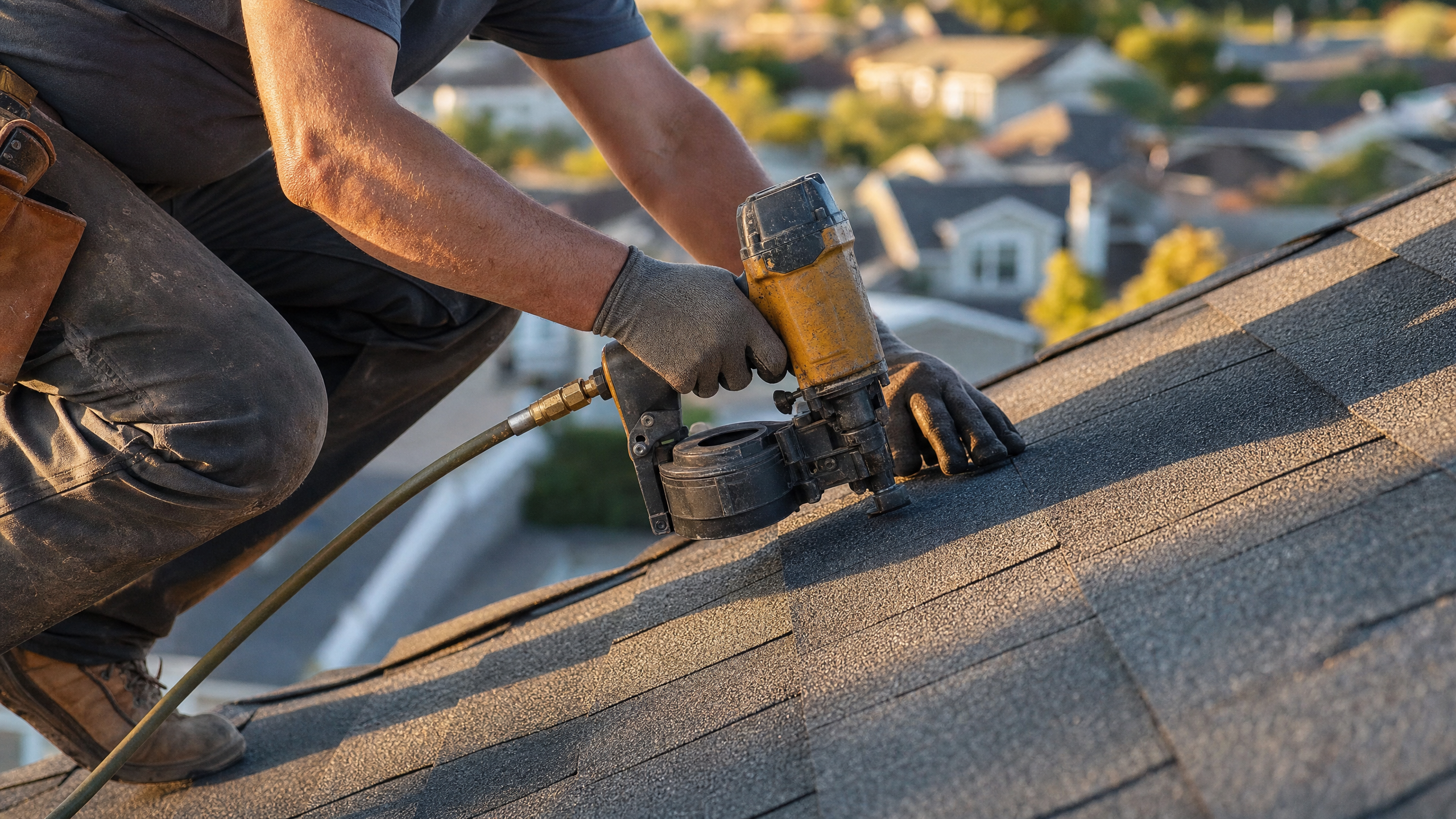
A roofing ad can run on almost any channel: social feeds, Connected TV, local cable, billboards, referral programs or even a Google Business Profile. No single channel dominates, and most roofing companies end up running them on a mix of channels. The consistent thread across every channel is the creative itself: lead with the problem (whether that's a leak, missing shingles, or storm damage), establish that the company is local, keep the copy short and use real photos or footage rather than stock imagery. Video carries real weight here too: in Wyzowl's research, people were 17% more likely to say a video ad would move them toward buying something than a static ad. The single strongest visual that any home service ad can use is before-and-after proof; that kind of video does the persuading without needing much copy around it.
The five-beat structure
A roofing ad that converts viewers usually follows the same beat structure, regardless of length or platform.
| Beat | Timing | What it does |
|---|---|---|
| Hook | 0 to 3 seconds | A line or visual built to stop the scroll, usually framed around urgency or cost risk |
| Problem | 3 to 8 seconds | Real footage or photos of the damage, missing shingles, water stains, sagging areas |
| Transformation | 8 to 15 seconds | Before-and-after footage, which is the built-in creative advantage roofing has over most trades |
| Trust | 15 to 20 seconds | One to three credibility signals. Think: licensed and insured, years in business, free estimates, or warranty |
| CTA | Final 3 to 5 seconds | One clear next step plus company name, phone, website, and service area |
Ads most often go wrong on the fourth beat, trust, by trying to fit too much in. When a company has a number of credibility signals, it can be hard to leave any out, but being concise makes a difference. One to three signals read as confident. Six reads as a company trying too hard to convince someone.
A 20-second ad built around a re-roof might run like this:
- The hook: a close-up of damaged shingles with the line "Is your roof trying to tell you something?"
- The problem: a shot of a water stain or damaged flashing with "Leaks don't get better on their own."
- The transformation: a before-and-after transition with "We make roof replacements simple."
- The trust: a crew shot with "Local. Experienced. Built to last."
- The closing: a finished-roof shot with "Free roof estimates" plus the company name, phone number and service area.
In this ad, every beat is a single line and a single image or clip, which is what keeps a 20-second ad from feeling rushed.
Types of roofing ads
This five-beat structure works across a handful of distinct concepts for ai-generated ads. The material that a roofing company has on hand impacts which ad concept they might choose to run.
| Type | Best when |
|---|---|
| Before and after | A company has strong project photos; this is the easiest and most reliably effective option |
| Signs you need a new roof | Educational framing works for a company building long-term brand awareness |
| Storm damage | Timed right after a weather event, when local search interest spikes |
| Testimonial | A recent customer is willing to share a quick photo or quote about a roofing project |
| Company credibility | A company wants to lead with crew, trucks and years in business rather than a specific project |
| Local | Service area needs reinforcing against out-of-town competitors who are bidding on the same leads |
A before-and-after ad and a storm-damage ad often draw from the same pair of photos (usually a damaged roof and its repair), just with different framing on the hook and trust beats. A company that maintains a simple habit of photographing the start and finish of every job will end up with enough raw material to run several of these ad types from a single project, rather than needing a distinct shoot for each ad concept.
Building the ad from existing photos
You can build a roofing ad in Runway by describing what you want to Agent. Put real photos in and get a finished ad out thanks to AI video generation. Instead of generating a roof, a crew or a project from nothing, the tools build off the existing photos. A workable starting set for an ad can be small: just three to five photos of the damaged or old roof, three to five installation photos, one or two finished-roof shots, plus a logo, service area, phone number or website and a couple of selling points to draw the trust beat from.
Match each photo to its beat in the structure above: the damaged-roof photo covers the hook and problem, a before and after transition carries the transformation, a crew or finished-roof shot supports trust and a closing frame with the company name and contact info carries the CTA. The before and after transition is simple: upload the before photo and the after photo to Runway and describe the transition to a creative agent, and it generates the motion between them. For a re-roof with more progress photos, use the same approach as a construction timelapse instead of a single before-and-after cut.
Once the base ad exists, a team can make variations using the same source photos: a different hook line, a different trust signal or a vertical cut for social media like Instagram Reels next to a widescreen cut for YouTube, all without reshooting anything.
What it costs
A Connected TV or local cable spot showcasing before-and-after footage typically runs $3,000 to $8,000 a month once you factor in both production and placement, and that's before calculating any ongoing spend to keep the spot running. Building the same transformation section from existing job photos removes most of the production cost from that number, leaving mostly the ad placement spend itself. That cost difference is a large part of why ads built from photos scale to a company running several jobs a week, while a traditionally produced TV spot tends to be limited to a larger company's flagship campaigns.
Ads can run on lower-cost channels, too. Community sponsorships and local partnership placements can run $500 to $2,500 in lower-cost locales, well below the cost of a TV spot, but they don't carry the same before-and-after creative advantage a video ad does. For a company weighing where to put a limited budget, a photo-built video ad often lands in the middle: cheaper than a produced TV spot, but with the direct transformation payoff that a sponsorship or print placement can't offer.
Frequently asked questions
What's the difference between a roofing ad and a roofing marketing video?
A roofing ad is built around a single conversion action, whether that's a call, a free estimate or a booked inspection, and runs on a paid or promoted channel. A roofing marketing video can be longer and less sales-driven, built to establish brand awareness or show off a company's work without necessarily asking for anything immediately. The same footage can often produce both final products.
How much should a roofing company spend on video ads?
It depends heavily on the channel. Connected TV and local cable spots commonly run several thousand dollars a month once production and placement costs are combined. Social ads built from existing job photos can run for a fraction of that, since there's no production cost beyond the time it takes to build the video itself, leaving the budget almost entirely for ad spend.
Can AI create ad variations from the same footage?
Yes. A single set of before-and-after photos can support several finished ads with different hooks, different trust signals or even different aspect ratios for different platforms, all without reshooting or re-editing from scratch each time.
Related: AI for roofers | Before and after video generator | AI construction timelapse video | Construction marketing video