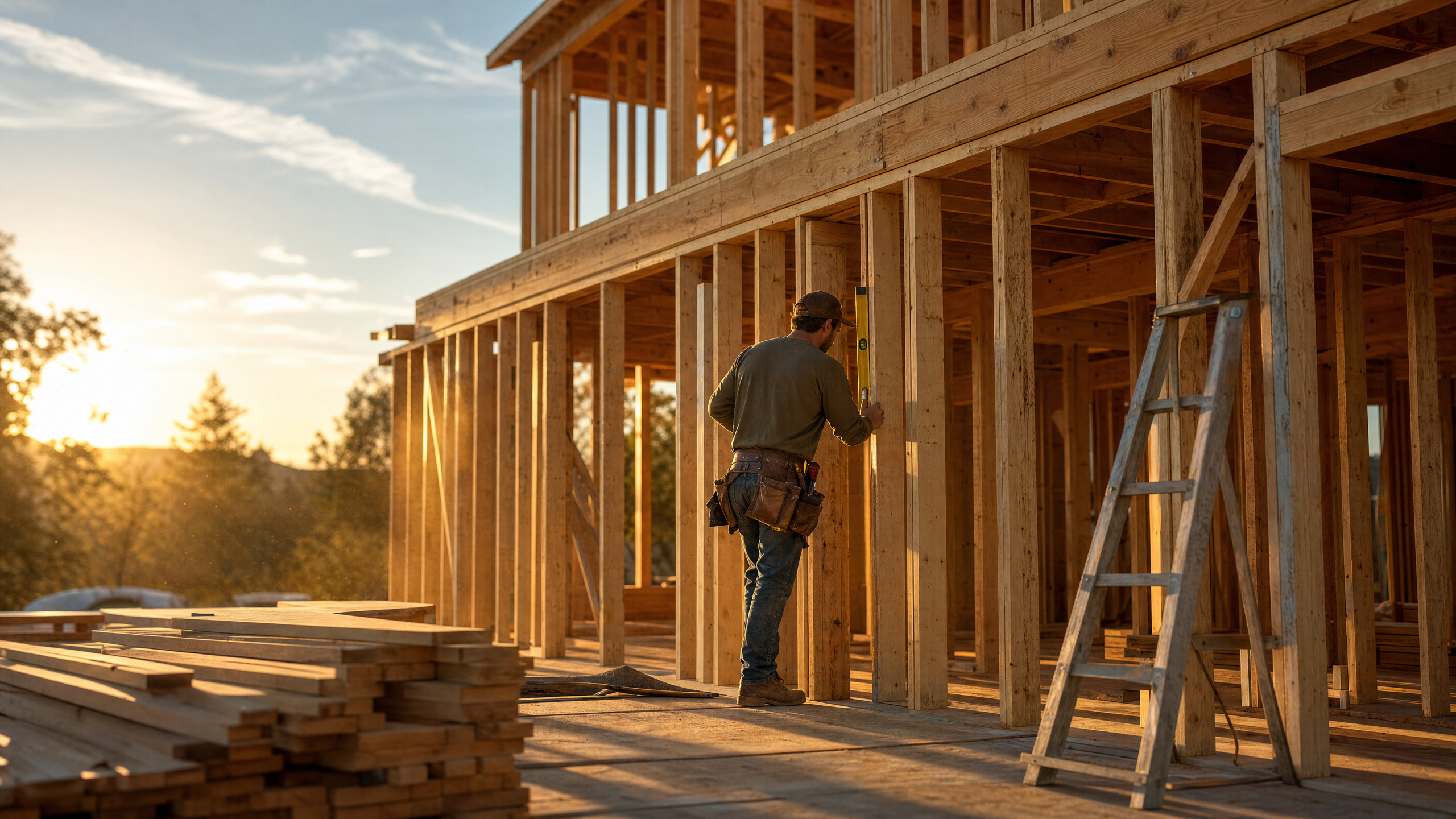
What a construction marketing video is
A construction marketing video is any video a construction company, builder or general contractor uses to promote its work, whether that's a project walkthrough, a client testimonial or a recruiting reel. Construction companies compete on trust as much as price, and video lets a prospective client or partner see the work in action, hear from people who already hired you and judge the quality of your crew before a conversation.
Video marketing for construction has moved from a nice-to-have to a standard line item in the marketing budget. Companies that add video to their marketing see meaningfully higher conversion rates than those that don't, and video content consistently outperforms photos in engagement. This is true across every platform construction companies use to reach clients, from LinkedIn to Instagram to a company website.
A marketing video also doesn't need to look like a commercial. A contractor explaining a decision while standing in a half-finished kitchen often lands better than a polished ad, because it shows the real people and work behind the company.
Why video works for construction specifically
Construction is a very visual and physical business. Most of what makes a company worth hiring, including craftsmanship, scale, speed and safety, simply won’t come through in text or in a handful of photos. Video closes the gap between work and marketing. A drone shot can communicate the size of a site better than any image. A site walkthrough demonstrates finish quality up close. A client interviewed on video projects customer trust in ways that a written testimonial doesn't.
There’s also a workforce angle for AI video marketing. Recruiting videos that show real job sites and crews help construction companies compete for skilled labor in a tight market. Firms describe this use case almost as often as sales content when detailing their video strategy.
None of this requires a full production crew. All a construction company needs to get started is a phone camera, a plan for what to shoot and a willingness to hit record. Today, video has moved from something only large general contractors could afford to something that construction businesses of every size now budget for.
Types of construction marketing videos
Most construction marketing video strategies draw from the same handful of formats. The right mix depends on the goal: win bids, build brand awareness or recruit.
| Video type | Length | Best for |
|---|---|---|
| Project highlight | 1-2 minutes | Showcasing a single completed project on a website or YouTube |
| Client testimonial | 30-90 seconds | Building trust with prospective clients during the bid process |
| Team or Q&A video | 1-3 minutes | Humanizing leadership and crew, differentiating from competitors |
| Recruiting video | 1-2 minutes | Attracting skilled trades and crew in a competitive labor market |
| Brand or company overview | 2-4 minutes | Homepage hero content, pitch decks and proposals |
| Social clips and reels | 10-45 seconds | Driving awareness on Instagram, TikTok and LinkedIn |
How AI fits into construction video production
The bottleneck in construction video is almost always capacity. Search for a construction video maker today and most of the results are still based on the assumption that a company is either hiring a crew or filming everything themselves. Marketing teams at construction companies are small. Footage often sits unedited on someone's phone for months and hiring a video crew for every project isn't realistic.
AI for construction business use cases like this are still new territory, but the fundamentals are consistent: real footage, produced faster. AI tools change the economics of filming capacity, without replacing the footage that makes construction video credible in the first place. An AI video generator turns job site photos into cinematic walkthroughs and aerial-style exteriors, part of a workflow built for home services and contractors. A folder of progress photos can quickly become usable video. Existing raw footage, like a ten-minute phone clip from a site visit, can be relit, reframed and cut down to a 30-second social clip through one workspace, rather than sent out to an editor.
AI is best at handling the editing layer that happens between filming raw footage and publishing a finished video. AI tools can find the strongest clips in a long recording, trim dead space, write a caption or voiceover from a rough description of the project and reformat one video into vertical, square and widescreen cuts for different platforms. That used to require an editor on retainer but now can be done in-house.
AI can also generate concept visuals for work that hasn't happened yet, like a proposed addition, which is useful for sales conversations and pitch decks. Be sure that any concept visual is clearly labeled as a concept rather than presented alongside footage of completed work, since the two carry different weight with a client evaluating a bid. Keeping AI output looking realistic is important here. Still, nobody wants to watch a fully fabricated clip of a job site. The biggest value for construction is that AI can add speed on top of real work by producing more from the photos and clips a company already has, and doing it without a separate edit for every video platform the company uses.
How to plan and produce a construction marketing video
- Pick the goal first. A video for a commercial bid requires different pacing and content than one meant for brand awareness on TikTok.
- Shoot more than you think you need. A 5:1 or 10:1 ratio of raw footage to finished video gives an editor room to find the real story underneath instead of stretching thin footage.
- Get the interview on camera. Client testimonials and leadership Q&As carry more weight than almost any other footage, and they're often the cheapest type of video to produce.
- Turn the questions clients already ask into videos. What does a bathroom remodel cost? Does this project need a permit? What should a client look for when hiring a contractor? Answering real client questions in a 30-second video builds more credibility than a general brand video, and companies usually already know what these questions are.
- Cut for the platform, not just the project. A 3-minute project story and a 15-second Reel pulled from the same shoot serve two very different purposes and should be edited separately.
- Publish on video-native platforms first. Hosting a video on YouTube and linking to it from a project page performs better than embedding large files directly on a website, both for load speed and for search visibility.
- Reuse everything. A single shoot day can produce a project highlight, social clips and B-roll for a brand video. Treat every shoot as raw material for multiple pieces of content.
Where to publish it
YouTube is the default home for construction video: it's a Google-owned platform, so hosted videos carry more SEO weight than embedded files, and it doubles as a searchable portfolio for prospective clients researching a company before a bid. A company's website should link out to the YouTube video from each project page rather than hosting the file directly, and short vertical cuts should be posted on Instagram, LinkedIn and TikTok to drive people back to the long-form version. Include the same links in project proposals, whether that's a URL in a digital proposal or a QR code on a printed one.
What it costs
A single project highlight video shot and edited by a freelancer or small production company typically costs a few hundred to a few thousand dollars, depending on the use of drone footage, interviews and location. In-house production, using existing job site photos and phone footage run through editing and AI tools, cuts that cost a fraction of that cost (beyond the time it takes for someone on the team to assemble the footage). Most construction companies land somewhere in between: a mix of a few professionally produced brand videos a year, supplemented by a steady stream of lower-cost project and social content.
Frequently asked questions
How long should a construction marketing video be?
It depends on the platform and the goal. Social clips under 45 seconds work best. Project highlight videos and testimonials should run 1 to 3 minutes. Full brand or company overview videos can be longer, but most viewers tend to stop watching after the 3-minute mark.
Do construction companies really need video marketing?
Not every company needs a full production budget, but some form of video, even a phone-shot site walkthrough or a client interview, consistently outperforms photo-only marketing on engagement and conversion. The bar for "good enough" video has dropped as cameras and editing tools have improved, making video a lower-cost investment than it used to be.
Can AI make a construction marketing video from photos alone?
Yes, within limits. Tools like the AI video generator from Runway can turn a set of job site or completed-project photos into a cinematic video, and can extend or enhance existing raw footage. However, AI tools can't manufacture the trust that comes from real footage of a real project, so the strongest construction marketing videos still start with a company's own photos and clips rather than a fully generated scene.
Related: Video marketing for contractors | AI for home services and contractors