What makes a plumbing ad work
A plumbing ad runs across the same channels as most home-services ads: Google Search and Local Services Ads, Facebook and Instagram, direct mail and Connected TV. What sets plumbing apart from most other trades is that the message for an ad needs to split sharply by urgency. A burst pipe at midnight and a planned water heater upgrade are two very different customer mindsets, and an ad that tries speaking to both challenges at once usually doesn't end up connecting with either audience.
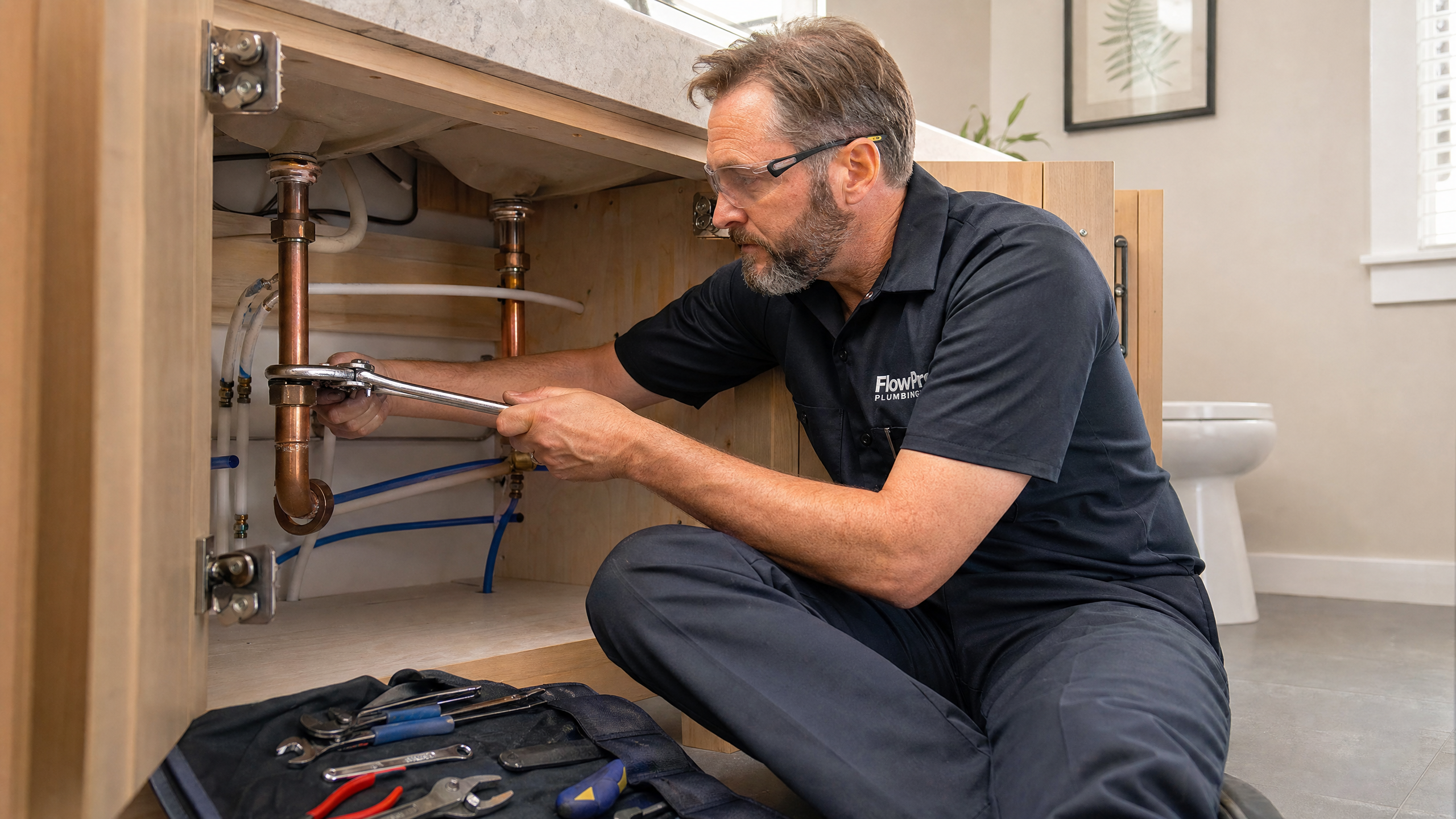
In plumbing, using real footage also makes a big difference, for the same reason as in many home services scenarios: a prospective customer trusts an actual plumber and an actual service vehicle more than a stand-in. That's true whether the ad is running as a paid social post or as a Local Services listing. In either scenario, the creative underneath the placement is what will be persuading potential customers.
Messaging for emergency plumbing versus scheduled plumbing
Ads tackling emergency plumbing needs should focus on speed and relief, rather than persuasion. "Burst pipe? Call 24/7" or "We're on the way" work as calls to action because they answer the only question a panicked homeowner has: can you come now? The call to action should be a phone number, not a form, and the whole ad should read fast, since nobody dealing with a flooding basement wants to watch anything longer than a few seconds.
Scheduled-service ads can go at a slower pace. A water heater upgrade or a planned repipe could be pitched with a convenience and savings framing. "Upgrade your water heater, book a slot this week," and a softer CTA like "Get a free estimate" removes pressure while still pointing toward a next step. The footage can be a lot slower too; think of a calmer walkthrough rather than an urgent cut.
The five-beat ad structure
A plumbing ad that converts usually follows the same beat structure whether it's built for an emergency or a scheduled job, just with different pacing and tone in each beat.
| Beat | Timing | What it does |
|---|---|---|
| Hook | 0 to 3 seconds | The problem itself, shown or stated directly |
| Problem | 3 to 7 seconds | A closer look at what's actually wrong |
| Fix | 7 to 13 seconds | The plumber working, then the result |
| Trust | 13 to 17 seconds | One or two credibility signals: licensed, insured and years in business |
| CTA | Final 3 seconds | Company name, phone number or one other clear next step |
Imagine a 20-second emergency ad built around a burst pipe. It might start with a stream of water spraying from a broken pipe with the line "Burst pipe?", a closer shot of the damage with "Every minute makes it worse," footage of the plumber shutting off the water and starting the repair with "We stop it fast," a quick crew shot with "Licensed. Insured. Available 24/7." and finally a finished, dry shot with the company name and phone number under "Call now, we're on the way."
Ad variations from one job
The same footage taken during a single job can support more than one ad. A few examples:
- A 15-second version for a Facebook or Instagram feed
- A 30-second service-focused ad that walks through what happened and what got fixed
- A before-and-after Reel built from just the start and end shots
- A short "meet the plumber" video built around the technician rather than the repair
- A dedicated emergency ad, cut faster and shorter than the others, held ready to run whenever a cold snap or a storm drives a spike in burst-pipe searches
Building a full library of these from routine service calls, rather than treating one major project a year as the marketing event, is possible with the right AI tools.
A few plumbing services carry their own built-in hook worth using directly in the problem beat. The selling point of trenchless pipe repair is partly about what it avoids: no dug-up yard, which matters to a homeowner picturing a demolished lawn. Hydro jetting sells itself on power and permanence, a stronger fix than a snake for a recurring clog. Both of these services work as a hook line on their own: "Fix your pipes without digging up your yard" or "Clear it for good, not just for now."
Building the ad with AI
Start from the footage that already exists rather than a blank prompt. Runway Agent takes real clips and photos and builds the ad around them, so a plumber caught on a phone camera stays the plumber in the finished ad rather than getting replaced by something generated. The same AI video generator that handles this works from a short clip or a handful of photos, so a workable starting set can be pretty small: a clip or photo of the problem, footage of the plumber working and a finished shot, plus a logo and phone number.
The before-and-after beat in particular is a great option for a plumbing ad: upload the before shot and the after shot, describe the transition to Agent and it generates the motion between them. For a larger job with more progress footage, a re-piping project for example, the same approach used for a construction timelapse can be applied instead of a single before-and-after cut. Once you have a base ad, the same AI video editor capabilities that handle captions and voiceover can produce the emergency visit and scheduled plumbing versions from the same source material, all without a second shoot.
What it costs
A produced TV or radio spot for a plumbing company typically runs into the thousands once production and placement are both counted, and most plumbing companies reserve that kind of spend for a single seasonal campaign rather than every service call. Building an ad from footage a plumber already captures on a normal job removes most of that production cost, leaving mostly the placement spend itself, which is part of why this approach scales to routine work rather than staying limited to a once-a-year commercial.
Emergency plumbing ads and scheduled service ads also tend to earn back their cost differently. An emergency ad usually converts fast. It might be seen by someone searching mid-crisis who calls within minutes, which makes it easier to justify running continuously rather than as a seasonal push. A scheduled-service ad, by contrast, is playing a longer game. It should stay in front of homeowners until they're ready to book a water heater upgrade or a repipe, so it's worth budgeting for steadier, lower-intensity placement over time rather than a short burst.
Frequently asked questions
Should an emergency plumbing ad look different from a routine-service ad?
Yes. An emergency ad should be fast, urgent and built around a single action (call now) while a scheduled-service ad can be designed at a calmer pace, with convenience framing and a softer call to action like booking online. Running the same ad to target both audiences usually undersells one of them.
How long should a plumbing ad be?
Emergency ads work best if they are under 15 seconds, since anyone searching in a crisis wants an answer immediately. Scheduled-service ads can run slightly longer, up to about 30 seconds, since there's more room to build a case for booking a project.
Can AI create ad variations from the same footage for different services?
Yes. The same job's footage can be recut with different hooks, different trust signals and different pacing depending on whether the ad is running as an emergency spot or a scheduled-service ad, all without reshooting anything.
Related: AI for plumbers | Before and after video maker | AI construction timelapse video