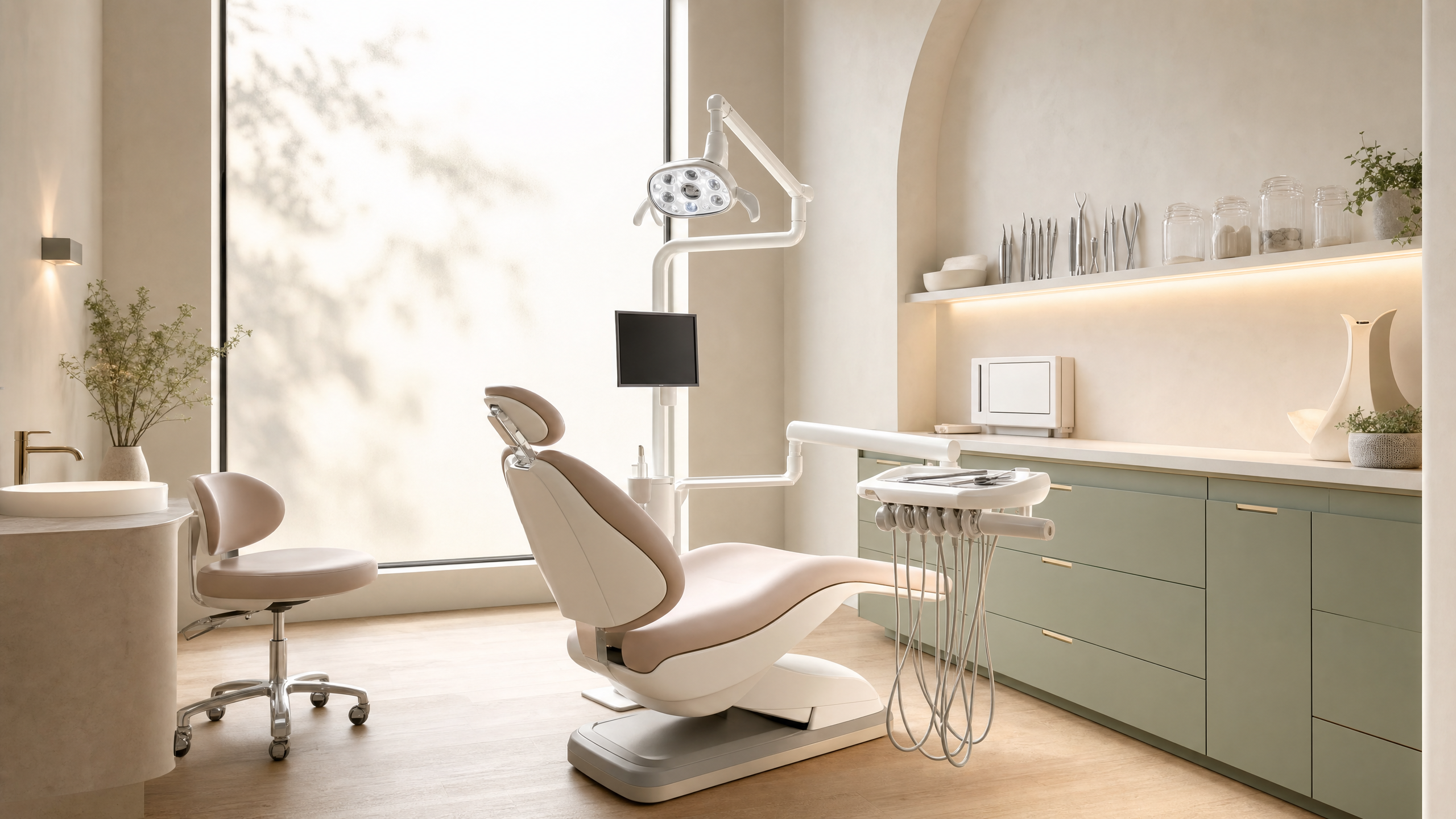
What is healthcare video marketing?
Healthcare video marketing is the use of video content (testimonials, explainer videos, provider introductions, facility tours) to attract, educate and retain patients. Hospitals, clinics, dental practices and pharma brands run it across their websites, YouTube channels, social feeds and patient portals to build trust before anyone calls to book.
It works because patients research before they contact a provider. In fact, a survey by Software Advice found that 90% of patients use online reviews to evaluate physicians. And while text reviews are easy to fake, a patient on camera describing their own recovery is harder to fabricate.
Healthcare video production has traditionally meant a film crew, a scheduled shoot and a signed release form for anyone who appears on camera. That's still the right approach for testimonials. But for everything else, AI-generated video is becoming a faster, lower-friction way to produce, and it changes what a small practice with little to no marketing staff can realistically ship.
Why healthcare organizations are investing in video
Text can tell a story, but not in the way videos do. Videos show the provider, the facility and the patient experience before someone walks through the door.
In a trial of 84 patients undergoing elective regional blocks, every patient who watched a procedure video reported low need for further information on the day of surgery, against 59.5% of those given verbal instructions alone. It's one small study, but it matches what clinics report anecdotally: video answers the questions patients would otherwise bring to check-in.
The investment case looks different by specialty, though.
A primary care practice competing on convenience and bedside manner gets the most out of provider introduction videos and short FAQ content. A cosmetic or dental practice competing on outcomes gets more from before-and-after framing and facility tours that reduce first-visit anxiety.
And a hospital system with dozens of service lines needs to go past a handful of hero videos to a content pipeline, since each department has its own audience and common questions.
The types of videos that work best for healthcare organizations
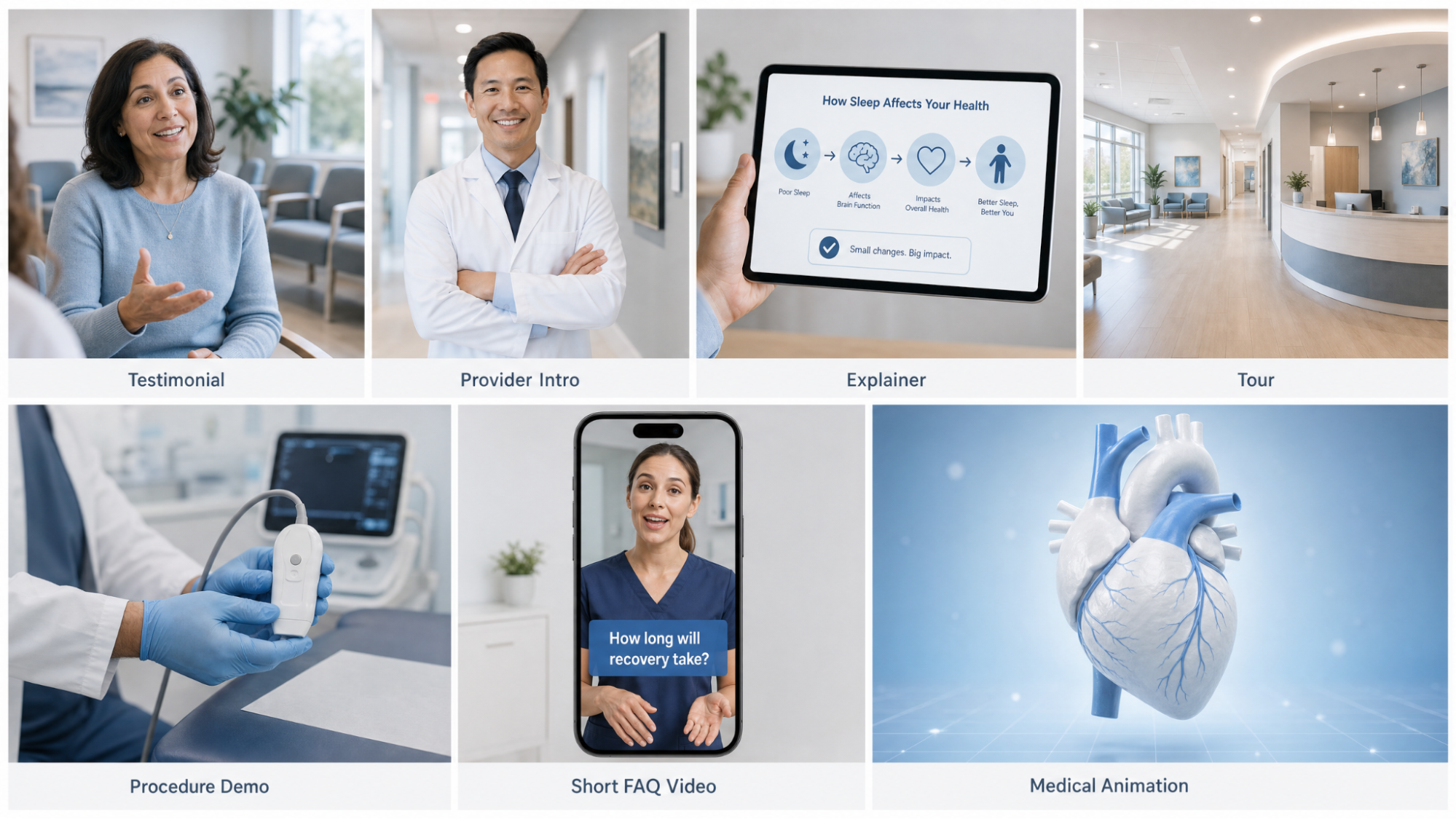
- Patient testimonials: The highest trust and conversion impact of any format, but they require signed authorization, and this is the one format where filming a real patient still matters most.
- Provider and staff introductions: Build familiarity with a doctor or care team before a first visit.
- Explainer videos: Break down a condition, procedure or treatment option in plain language; AI-generated visuals handle this format well since no patient needs to appear.
- Facility and office tours: Reduce first-visit anxiety, and work especially well for dental practices and med spas, where patients often postpone care out of fear of the unknown; also easy to generate from a handful of interior photos.
- Procedure demonstrations: Lower pre-procedure anxiety and reduce how much follow-up explanation patients need on the day of.
- Short FAQ videos: Answer the questions your front desk hears most, in 60 seconds or less.
- Medical animation: A fit when the thing you're explaining (anatomy, mechanism of action, a device implant) can't be filmed directly.
You can pick one or a handful of these to start. Simply select the formats that match where patients actually get stuck in your booking funnel.
For example, if most drop-off happens before a first visit, invest in tours and provider intros. If it happens after someone finds you but before they book, invest in testimonials and explainers that answer the objection keeping them from calling.
The role of AI in healthcare video marketing
AI-generated video handles the formats where a real patient was never required: facility tours, explainer visuals, provider introductions built from a headshot, and local ads promoting a specific service line. Instead of scheduling a crew, booking a location and coordinating around clinic hours, a practice generates the same video from photos and a prompt in hours instead of weeks.
Three things make this more than a production shortcut for healthcare specifically:
- Cost and turnaround. Most practices don't have marketing staff or budget for repeat shoots. A format that scales without a crew changes what's actually achievable for a single-location clinic, not just a hospital system with a media department.
- The consent bottleneck. Any video identifying a real patient triggers HIPAA's authorization requirements. AI-generated video sidesteps that entirely for formats that never needed a patient on camera in the first place.
- Localization at volume. Generating several versions of the same tour or explainer, one per neighborhood or service line, is realistic with AI-generated video in a way it rarely is with a film crew.
None of that applies to testimonials. Testimonials convert because they're real, and no amount of generation quality substitutes for an actual patient describing their own recovery. The honest split: keep testimonials real, and use AI-generated video for the formats where authenticity was never the differentiator in the first place.
Film crew production vs AI generated videos
| Film crew production | AI-generated videos | |
|---|---|---|
| Starting point | Scheduling | Photos |
| Where direction happens | Location | Prompt |
| What it involves | Release forms | Generation |
| Timeline | Weeks | Hours |
How to build a healthcare video marketing strategy
- Pick one goal and audience segment. "Grow bookings for [specific service line]" beats "increase visibility."
- Build a content mix for different purposes. Combine testimonials, provider intros, explainers and tours, so patients at different stages each have something to watch.
- Decide how you'll get video in front of real patients without violating HIPAA. This is the step that's easy to skip, but it's what determines what's actually achievable, from a quick AI-generated tour to a full testimonial campaign with signed releases.
- Match length to format. Keep social clips between 15 to 60 seconds, while testimonials, intros and FAQ content can run 60 to 90 seconds. Save anything past three minutes for in-depth explainers people are actively searching for.
- Localize where it matters. A facility tour, a "what to expect" video or a service explainer aimed at a specific neighborhood or region outperforms generic content, since most healthcare searches carry local intent.
- Host video on your own site and service-line landing pages first. So instead of treating YouTube or your social channels as primary destinations, repurpose it into shorter clips for those platforms afterward.
- Track bookings and inquiries tied to specific videos, not just view counts. A video with modest views that consistently precedes a booking is worth more than one with high views and no downstream action.
How to keep healthcare video marketing HIPAA compliant
HIPAA doesn't ban video marketing. It requires written authorization the moment a video identifies a patient by face, voice or any protected health information, for a use outside their own care. That authorization must specify exactly how the footage will be used, and any vendor that hosts or edits identifiable patient footage needs a business associate agreement (BAA) in place.
In practice, that means:
- Written, use-specific authorization for every patient who appears on camera, separate from standard treatment consent.
- Controlled filming locations. Exam rooms, whiteboards, charts and badges all risk exposing PHI incidentally, even when the patient isn't the subject of the shot.
- A BAA with any hosting, editing or AI tool that touches identifiable footage.
- A documented process for revoking consent, since patients can withdraw authorization after the fact.
This is why most healthcare marketing teams default to stock footage or skip any video content beyond the reception area. Getting a real patient signed, released, comfortable on camera and scheduled around clinic hours takes coordination most practices don't have the staff for.
For the formats that don't require a real patient at all, that bottleneck disappears. A facility tour, a procedure explainer and a local ad promoting a new service line. None of these need an identifiable patient in the frame, which is why AI-generated video fits them well.
Use cases for clinic video marketing include office tours, patient explainers and local ads generated without filming a real patient or collecting a single release form.
That being said, AI-generated video isn't a substitute for testimonials, for the same reason covered above: their credibility comes from being real. Keep testimonials real, and let generated video handle the formats where authenticity was never the point.
Video type by patient journey stage and HIPAA risk
| Video type | Patient journey stage | HIPAA/consent risk |
|---|---|---|
| Facility or office tour | Awareness | Low (no patient required) |
| Provider or staff intro | Awareness | Low (staff, not patients) |
| Explainer or educational | Awareness/consideration | Low (no PHI if scripted generically) |
| Local ad or service promo | Awareness | Low to medium, depending on footage source |
| Patient testimonial | Consideration/decision | High (requires signed, use-specific authorization) |
| Procedure demonstration | Decision | Medium to high (real footage may expose PHI) |
| Pre/post-op patient education | Retention | Medium (often distributed only to existing patients under a different consent path) |
In-house vs. outsourced vs. AI-generated production
| Approach | Typical turnaround | Typical cost | Best for |
|---|---|---|---|
| In-house filming | Weeks (staff scheduling, patient coordination) | Low equipment cost, high staff time | Practices with marketing staff and willing patients or providers |
| Outsourced agency | Weeks to a couple of months | Highest upfront cost | Polished testimonials, brand campaigns, hero content |
| AI-generated video | Hours to days | Low, scales with volume | Tours, explainer visuals, local ads: anything that doesn't need a real patient on camera |
Where healthcare organizations should distribute videos
Start with your own website and service-line landing pages, where video supports SEO and keeps any patient-specific consent contained to a page you control. Add YouTube for how-to and explainer content people search for directly.
Repurpose longer shoots into short clips for social, where testimonials and FAQ content perform best. Reserve patient portals for pre- and post-op education that doesn't need to be public.
Build local intent into both the content and the distribution plan. Most healthcare searches are tied to a specific city or neighborhood. So a facility tour or service explainer that names the location, mentions nearby landmarks or targets a specific regional need will outperform the same video published generically.
Pair localized video with a location-specific landing page rather than a single national page for the whole practice.
Resist the instinct to publish everything everywhere. A patient testimonial with detailed, use-specific consent for your website doesn't automatically clear the bar for a paid social ad, and a video approved for a patient portal may not be approved for public YouTube.
Match the distribution channel to what the underlying consent actually authorizes, not to where the video happens to perform best.
How to measure ROI from healthcare video marketing
Beyond view count or watch time, track bookings and consultation requests attributed to specific videos through UTM parameters or dedicated landing pages.
Compare consultation requests on a service-line page before and after adding testimonial content, and hold the comparison period long enough to account for normal seasonal booking swings. Weigh cost per lead against your other channels, factoring in the actual production cost of each video rather than treating it as a sunk cost outside the analysis.
A practical example
A service-line page that adds one testimonial and one explainer video, then sees a measurable jump in consultation requests over the following quarter, has justified the production cost of both. A page that adds five videos and sees no change in requests is a sign to revisit the format mix or the placement before considering adding a sixth video.
Frequently asked questions
How much does healthcare video marketing cost?
Costs range widely by format. In-house testimonials shot on existing staff time cost little beyond scheduling. Outsourced agency production for a polished testimonial or brand video typically runs into the thousands of dollars per video once travel, crew and editing are included. AI-generated video for tours, explainers and local ads costs a fraction of that and scales with volume rather than shoot days.
What platforms are best for hosting healthcare videos?
Host video on your own website and service-line landing pages first, since that supports SEO and keeps conversion tracking simple. Use YouTube for discoverable how-to and explainer content, and social platforms for short, repurposed clips. Avoid relying on a single third-party platform as your only home for video.
Do I need patient consent for every video?
Yes, for any video that identifies a patient by face, voice or protected health information for marketing use. That consent needs to be written, specific to the intended use and separate from standard treatment consent. Videos that don't feature identifiable patients, like facility tours or generic explainer content, don't trigger this requirement.
Can AI-generated video be used for HIPAA-sensitive healthcare marketing content?
AI-generated video sidesteps the HIPAA consent problem for formats that don't require a real patient on camera, such as office tours, explainer visuals and local ads. It isn't a substitute for patient testimonials, where the format's entire value comes from being real. Any hosting, editing or generation tool touching identifiable footage still needs a business associate agreement.
How long should a healthcare marketing video be?
Match length to where it will run. Social clips work best at 15 to 60 seconds. Testimonials, provider introductions and FAQ videos run 60 to 90 seconds.
Explainer videos covering a procedure or condition in depth can run longer, up to three or four minutes, as long as the first few seconds make clear what the viewer will learn.
AI-generated video removes the patient-release bottleneck entirely for the formats where a real patient was never the point. Runway's AI video generator turns photos and simple prompts into finished office tours, explainer visuals and local ads, no release forms required. Get started for free.
Related: Video marketing for businesses | How real-time video generation is changing online interaction