At Nvidia, the Story Is Becoming the Interface
time it took Runway to bring Gen-4.5 up on Vera Rubin, Nvidia's newest platform
1 day
since RTX made real-time rendering possible
8 years
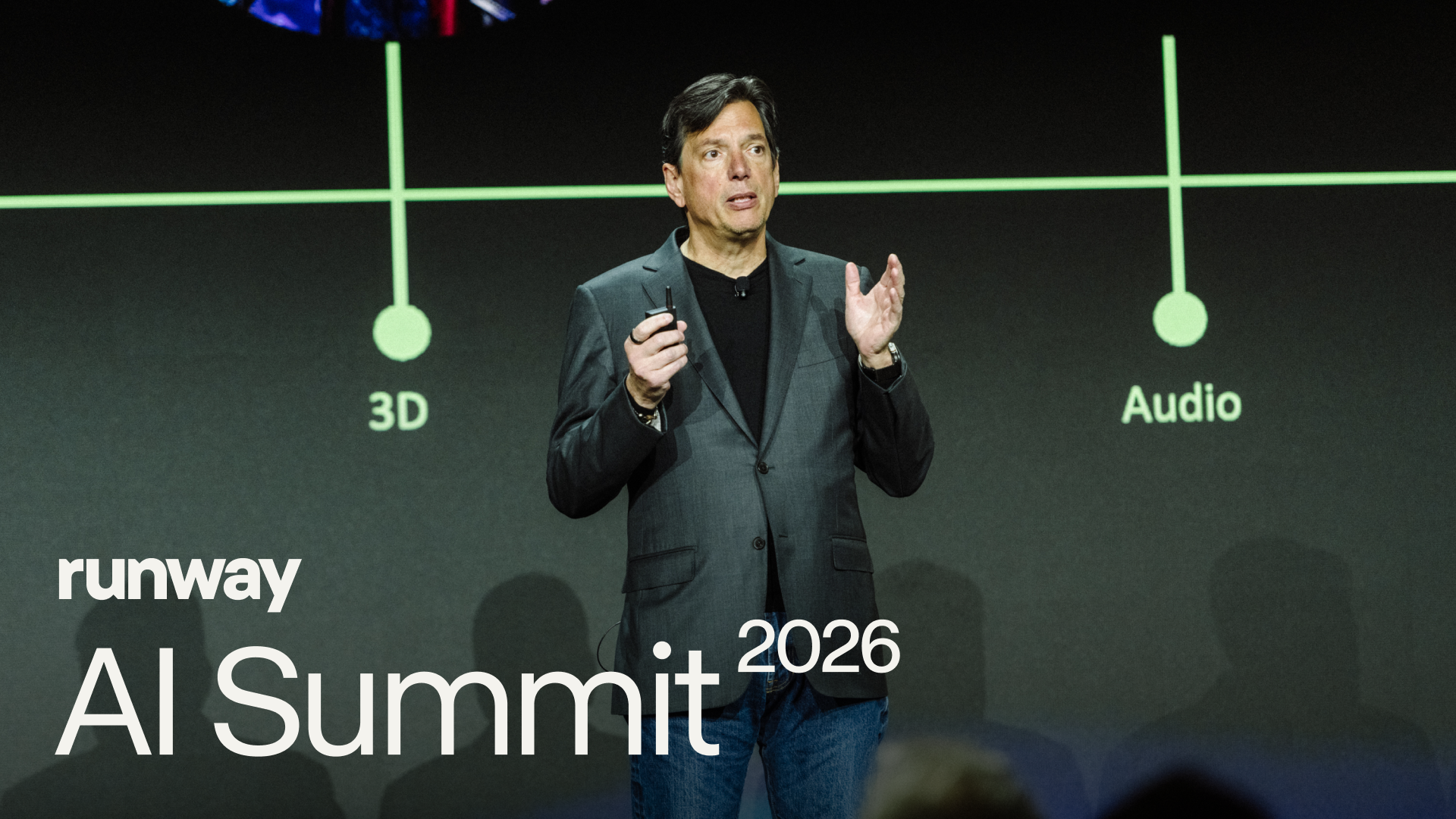
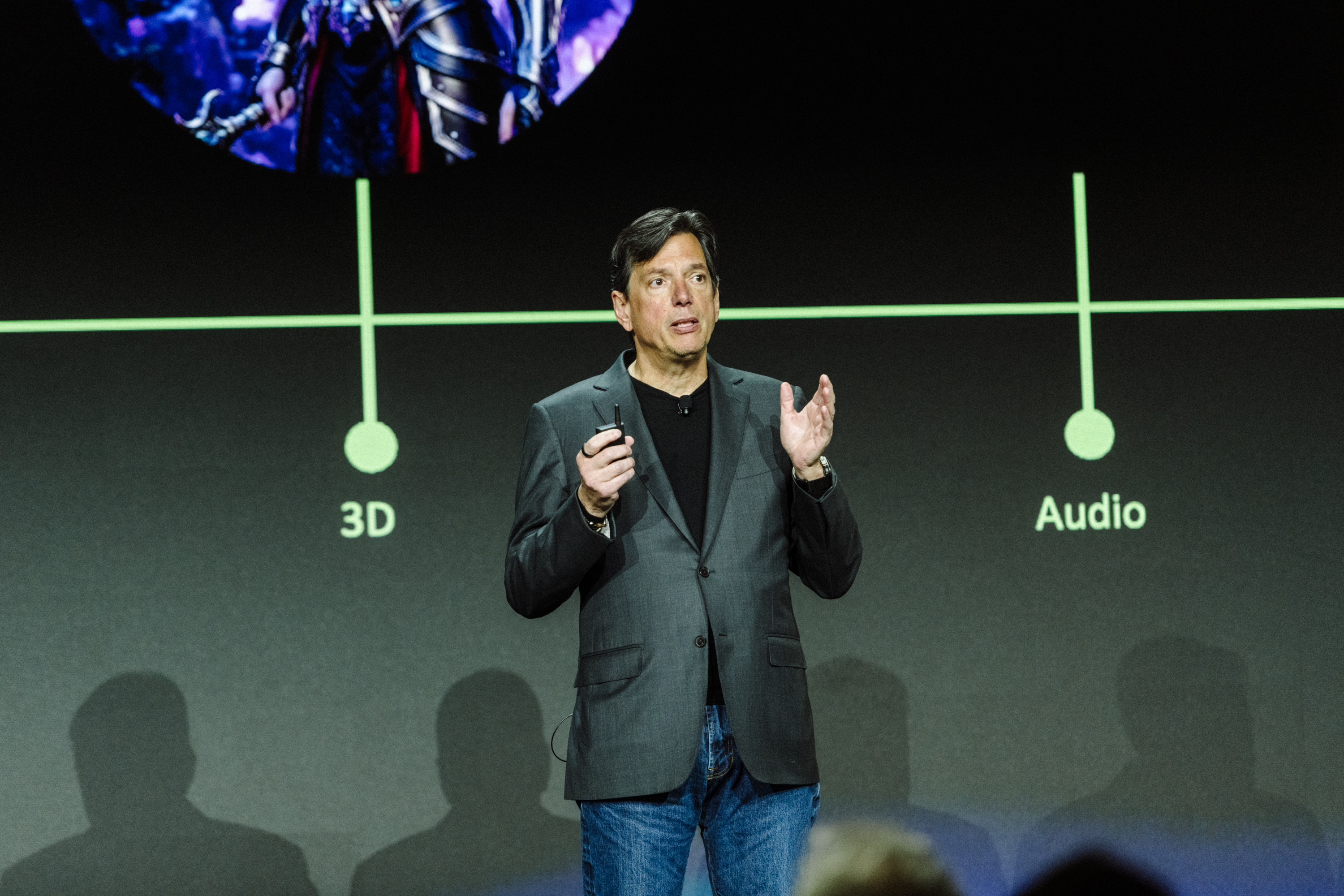
Richard Kerris has spent a career at the junction of computing and storytelling, and as Nvidia’s VP and GM of Media and Entertainment, he now watches every creative workflow converge on the same substrate. His argument runs in one straight line: real-time rendering made simulation possible, simulation made generative AI possible, and the next step, agents you simply talk to, turns the story itself into the interface. His advice for leaders: AI is a new compute model worth rebuilding around.
For most of computer graphics history, rendering was the bottleneck. A single scene could take weeks, a feature film years. Kerris built his career watching that wait shrink, and his argument begins with what happened when it finally disappeared. He believes the same pattern is about to repeat, this time closing the distance between describing a scene and seeing one.
Real Time Was Only the First Step
Kerris thinks the industry's AI moment is widely misread. “They're using it more like a Google, in a sense — a better version of Google. They're using it like a feature,” he says. “But there's so much more that's about to happen with AI.”
He reads the moment through a longer arc, one that began when RTX made rendering real-time eight years ago. The point was never speed. “When you can simulate reality, it's the first step in achieving what we're doing today with AI.” Generative AI then inherited the old bottleneck in a new form. Prompting worked, but the heavy lifting still took time. That wait is what Kerris says Nvidia's new Vera Rubin platform is built to eliminate.
A New Platform, Running Runway in a Day
Runway was Nvidia's major partner at the Vera Rubin launch, and the collaboration doubled as a stress test of the platform's promise. “Runway was able to bring their 4.5 software up in a day on Vera Rubin, and the results blew us all away,” Kerris says. “It was another milestone in the industry for real-time computer graphics with real-time generative AI.”
Three months earlier, Runway Gen-4.5 generated scenes in minutes. Accelerated by Vera Rubin, the new model generates them instantly, and that speed changes the nature of the work. Instead of waiting on a render, a director gives new direction and new frames appear, the scene updating as fast as the idea arrives. Generation is able to become a live creative loop, closer to conversation than production.
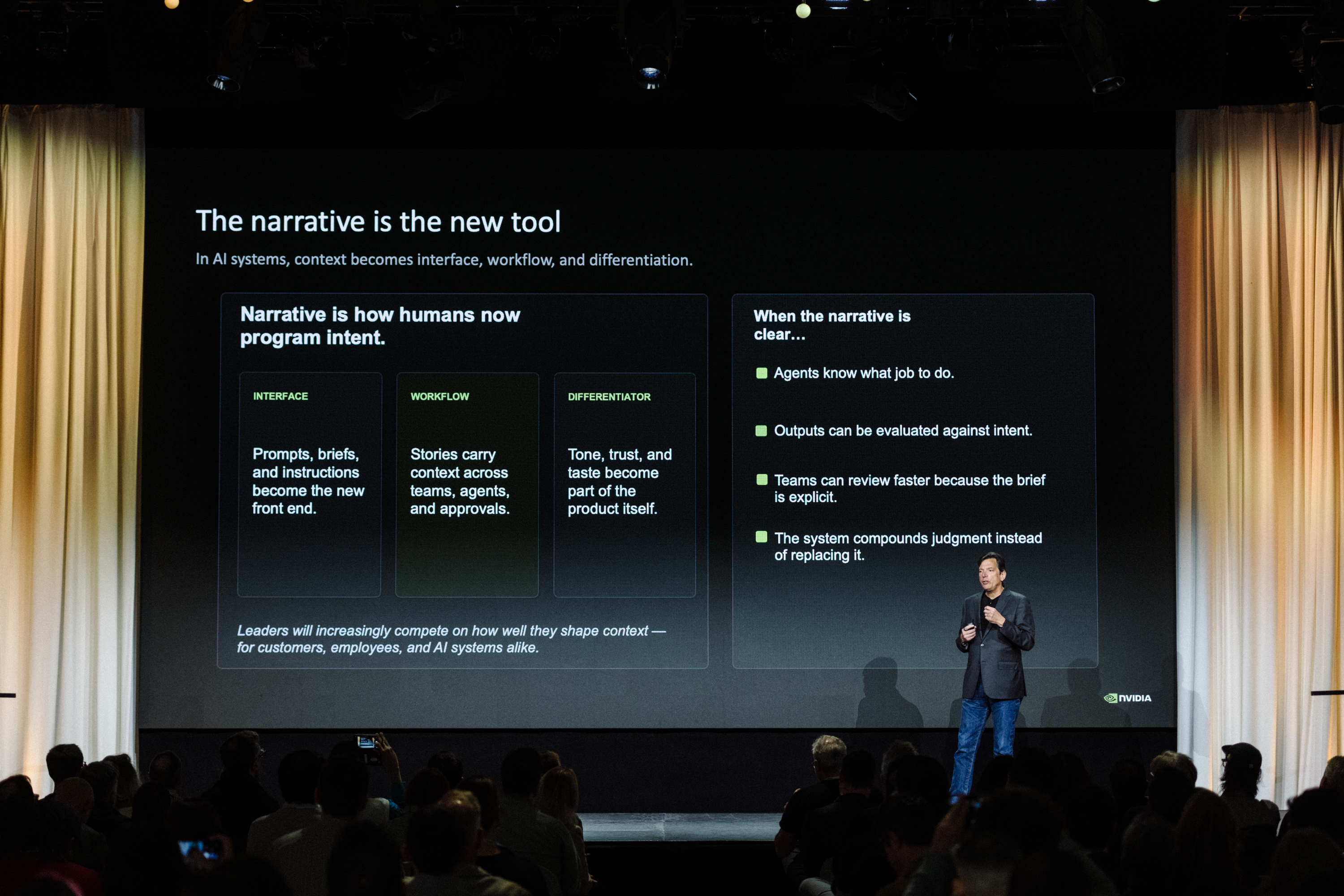
The Narrative Is the New Tool
Every film and campaign still moves through a relay of handoffs: storyboard to wireframe to animatic, each stage locking in the one before it. Discover at step six that step two was wrong, and the only way back is to take the whole thing apart. Kerris argues that AI dissolves the relay. “AI is now the pipeline. AI is underneath all of these different steps, and it understands all of the steps. So you can be at any one of them and go back to another one and make changes, and it'll all conform appropriately.”
The same intelligence turns a studio's past into working material. Hundreds of exabytes of footage sit in archives no search box can reach, and Universal Music Group (UMG) holds billions of hours of content that, in Kerris's words, “no mere mortal” could ever sift. Nvidia's new partnership with UMG trains models on those archives so that someone can finally just ask them a question.
Rebuild Around One Workflow at a Time
The mistake Kerris warns leaders against is the comfortable one — treating all of this as a line item. “AI is not just a feature you add on to something that exists today. It's a new compute model. It's the underlying fabric of everything that goes on.”
He believes rebuilding starts small, recommending you begin by picking one workflow and dissecting it. “Understand where you're spending the most time, money and other things, and then start to build agents that can address those things,” he says, or work with partners who already have them. He recommends keeping governance inside the workflow, and when it works, “train the organization on the narrative that it took to create [it].”
For Kerris, all of it traces back to George Lucas and what he considers the industry's founding law — story first and technology after. Lucas “was one of the least technical persons you'd ever meet,” he says. “But he had a vision and he would just challenge his team with that vision... and the technology would serve that story.” The proof he reaches for is a Runway-made film, offered with a single instruction: don't look at the technology; look at the story.
Based on a presentation in New York City by Richard Kerris, VP and GM of Media and Entertainment at Nvidia, during the 2026 Runway AI Summit.