3 times
Kuwahara has watched animation change mediums — hand-paint to digital, paper to tablets, and now AI
55 years
between the World Cup that Brazil 70 recreates and the tools finally able to fill its stadiums
Girish Balakrishnan leads creative innovation at Netflix, where AI is treated as the newest chapter in a company-long practice of putting technology behind storytellers. Joel Kuwahara has spent more than thirty years in animation, from The Simpsons in the 1990s to co-founding Bento Box, the studio behind Bob's Burgers, before launching his new venture FutureCel. One works inside the world's biggest streamer, the other builds studios from scratch, and they arrive at the same conviction from opposite ends of the business. The tools are the means, and the story is the why.
“Netflix has always been at this intersection of technology and filmmaking,” Balakrishnan says. “AI is just another chapter in that for us.” The people leaning in hardest are the filmmakers themselves. Department heads around the world are designing costumes and sets early, testing how a scene will be lit before anyone steps on set, previsualizing stunts, and pulling off effects that couldn't be done any other way. On one production, it changed what made the final cut.
Shots That No Longer Get Cut
The story Balakrishnan reaches for is a period piece. Pedro and Paulo Morelli, the father-and-son filmmakers behind Brazil ‘70, are recreating the 1970 World Cup, and authenticity is the crux of the entire project. Their wish was disarmingly simple. “We just want to tilt the camera up,” they told him. They wanted to show the actor playing Pelé, pull out into the crowd and feel the scope of a packed stadium. Shots like that were simply not feasible for the production, so Netflix brought in Eyeline, its visual effects and innovation hub, and blended practical photography, traditional effects and generative tools until the stadiums filled with crowds that felt emotional and real.
Without that, Balakrishnan says, “these would just be shots that would have been cut.” He now asks the same question of every film. “More often than not, when we think about AI and we think about filmmaking, [we can ask], what are the things that are left on the cutting room floor that we can finally keep?”
Animation Has Been Here Before
Kuwahara has watched his industry meet a new tool before, and the reception never changes. “Every time there was this inflection point, it's met with both excitement and a lot of anxiety at the same time,” he says. He was there when hand-painted cels gave way to digital ink and paint, and again when paper storyboards gave way to tablets, a shift he remembers as controversial in its day. Some artists made the leap while others kept working traditionally, a choice he respects. The industry itself has only ever moved forward.
What draws him to AI is what animation has never had enough of: chances. The work takes so much labor that “we don't get a lot of opportunities to really do the best version,” he says. Iteration changes that math, letting teams test, get feedback, and explore. The constant, for him, sits outside the technology entirely: “It is still going to come down to the craft and the vision of the artist and the storytellers.”
A Pitch Is Still a Pitch
For creators hoping to bring AI-made work to a major platform, Balakrishnan's bar hasn't moved. “We're looking for great stories told by great storytellers, using innovative new tools that connect with audiences,” he says. “We look at a film as a film. We're looking at a pitch as a pitch.” His advice is to invest where the leverage has always been. “Hone in on the craft of storytelling, and let the tools be the means and let the story be the why.”
Kuwahara knows how enticing this new level of speed can be, how quickly an impressive result appears on screen, “like a nice magic trick for your friends,” he says. “But you’ve got to step back. You’ve got to be objective. Is it the best version? Is it funny? Is it telling the character's story? And if it isn't, then you need to try it again.” The critical eye, in his telling, is not a gate at the end of the process; it’s the craft.
A Medium Finding Its Own Strength
Kuwahara doesn't buy the replacement narrative, because new forms have never behaved that way. “TV didn't replace movies,” he says. Video games created a whole new way of telling stories, and short-form video defined a form of its own. “I think AI is going to find its own niche in its own strength,” with the exciting part being the creators experimenting their way toward it now, including into interactive territory no one has named yet.
For Balakrishnan, the answer was sitting beside him all along. What he admires in Kuwahara's studios is a culture that keeps “artists at the center of the storytelling” while the technology hums in the background. He holds every new tool to the same test: “What is the problem we're trying to solve, and how does technology help support that storytelling?”
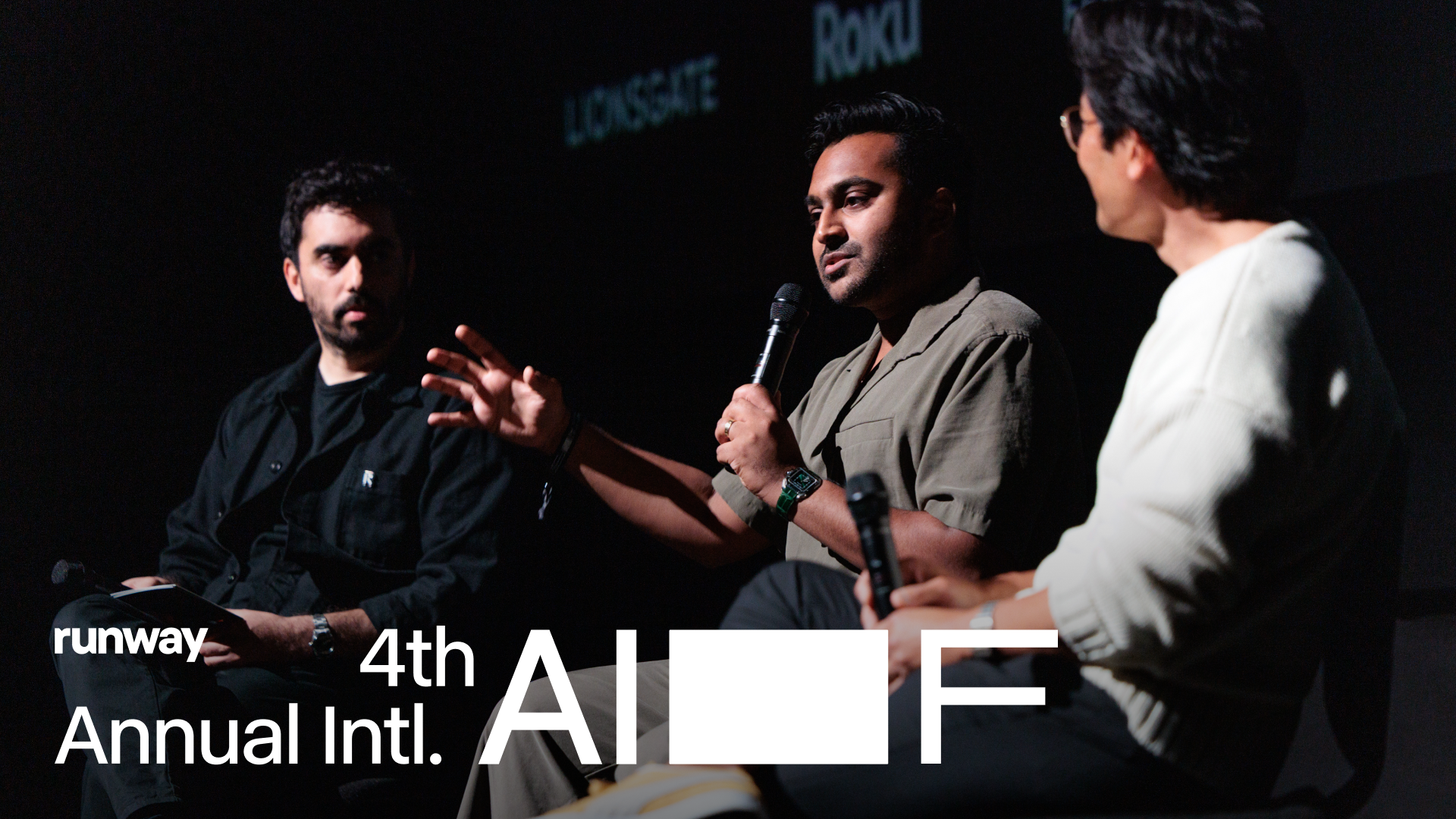
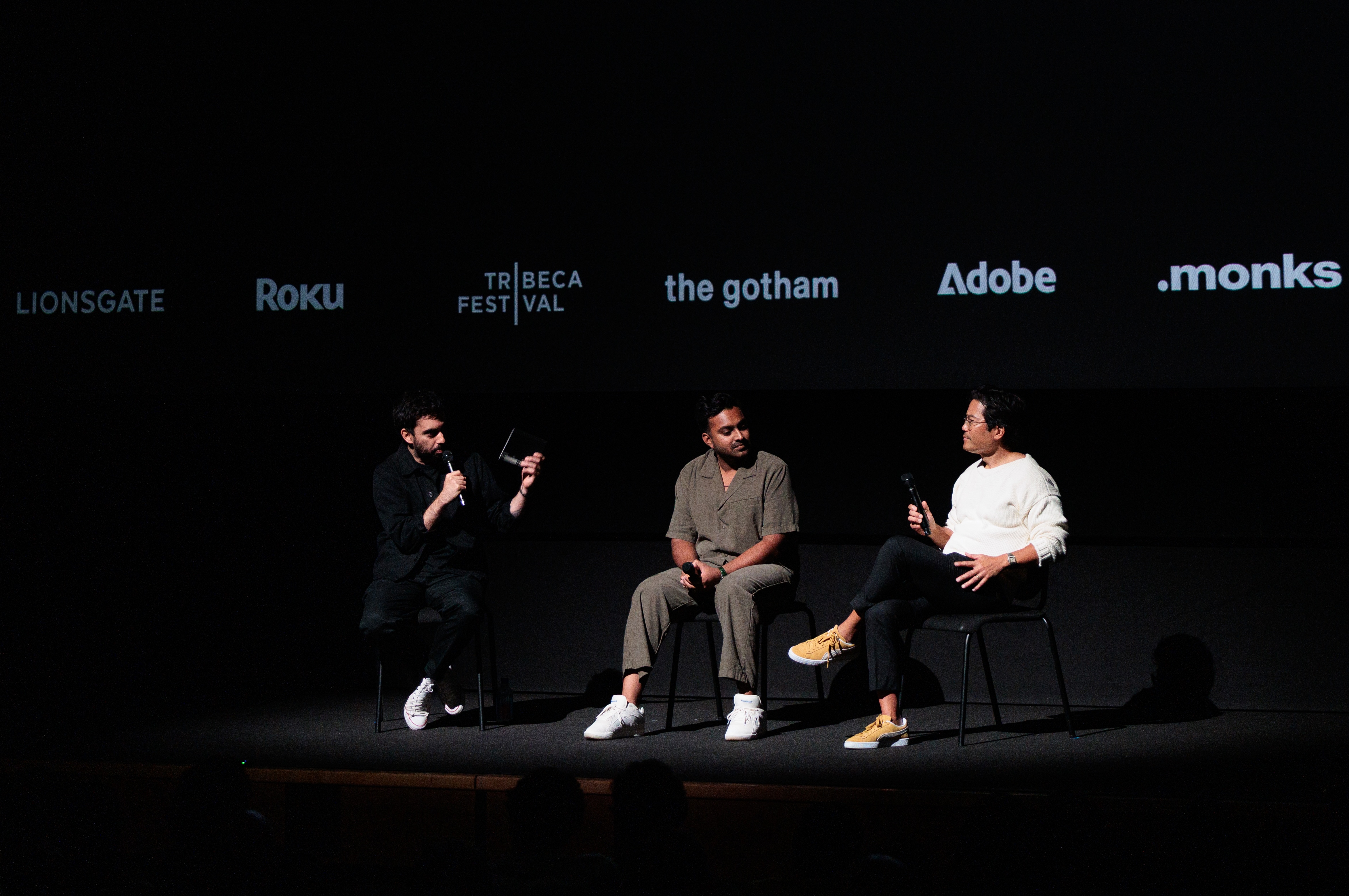
Based on a conversation in Los Angeles with Girish Balakrishnan, Senior Director of Creative Innovation at Netflix, and Joel Kuwahara, founder and CEO of FutureCel, moderated by Runway co-founder, Cristóbal Valenzuela, during the 2026 Runway AI Festival.